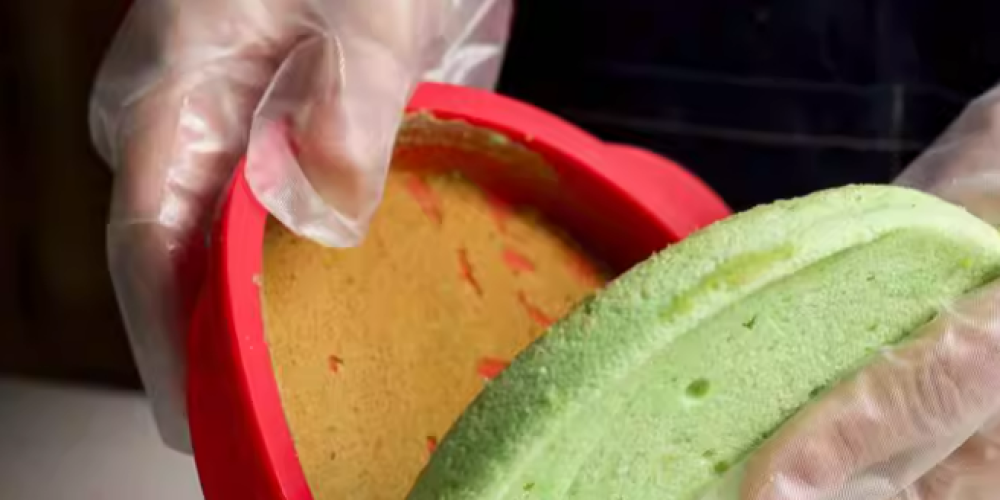
Silicone baking trays are one of the most popular baking tools in modern kitchens.
They are flexible, non-stick, lightweight, and easy to clean. For many years, these advantages made silicone the preferred choice for home bakers around the world.
However, as home baking becomes more frequent, a common question begins to appear:
Why do some silicone baking trays lose their shape over time?
This article does not focus on defects or poor manufacturing. Instead, it explains why deformation is a natural issue when silicone is used under long-term and high-frequency baking conditions.
1. Silicone Works Well — Within a Certain Range
Silicone is widely used in baking tools because it has several strong advantages:
- Good heat resistance
- Excellent non-stick performance
- High flexibility
- Easy storage and cleaning
For occasional baking, silicone performs very well.
If a tray is used once or twice a month, stored properly, and not overloaded, deformation is rarely noticed.
The problem starts when usage conditions change.
2. What “Deformation” Really Means in Baking Trays
When people talk about deformation, they often imagine extreme cases.
In reality, deformation is usually gradual and subtle, such as:
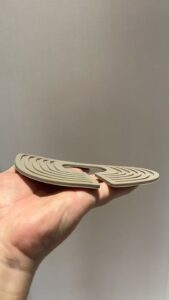
- Slight bending when placed on a rack
- Loss of flatness after heating
- Softer structure at high temperatures
- Tray edges curling slightly over time
These changes may not make the product unusable, but they affect user experience, especially for frequent bakers.
3. The Core Reason: Silicone Is Soft by Nature
To understand deformation, we must understand one key fact:
Silicone is designed to be flexible.
This flexibility is exactly what makes silicone attractive — but it also creates limitations.
When exposed to:
- Repeated heating and cooling cycles
- High baking temperatures
- Heavy batter or dough
- Long baking durations
Silicone gradually responds by softening further under heat.
Over time, the material may not return fully to its original shape.
This is not a defect. It is material behavior.
4. Heat Alone Is Not the Only Factor
Many users believe deformation happens only because of high temperature.
In reality, deformation is usually caused by a combination of factors:
1. Repeated Heat Cycles
Each baking session expands and relaxes the silicone structure. Repetition accelerates shape fatigue.
2. Weight Load
Cake batters, bread dough, and layered desserts place continuous pressure on the tray during baking.
3. Uneven Support
When a flexible tray is placed on a wire rack instead of a flat baking sheet, gravity plays a role.
4. Storage Conditions
Stacking, folding, or squeezing trays during storage can permanently affect shape over time.
Individually, these factors may seem small. Together, they explain why deformation appears gradually.
5. Why Frequent Bakers Notice It More
Casual users may never encounter deformation issues.
Frequent bakers, however, use the same tray:
- Weekly or even daily
- At higher temperatures
- For larger or heavier recipes
For them, even small changes in shape matter:
- Batter spreads unevenly
- Trays feel unstable when carried
- Baking results become inconsistent
At this point, users stop asking “Is it non-stick?”
They start asking “Is it stable?”
6. Why Thicker Silicone Is Not a Complete Solution
Some products try to solve deformation by making silicone thicker.
While this helps to a certain extent, it introduces new trade-offs:
- Higher material cost
- Slower heat transfer
- Heavier feel
- Still limited structural support
Thickness alone cannot fully solve the problem because the material itself remains soft.
7. Why Deformation Is a Design Issue, Not a Quality Issue
It is important to be clear:
Most silicone baking trays that deform over time are not poorly made.
They are simply:
- Designed for light to moderate use
- Made from a single flexible material
- Used beyond their original design expectation
As consumer behavior changes, product design must adapt.
This is why deformation becomes a market-level issue, not a factory-level mistake.
8. When Reinforcement Becomes Necessary
When flexibility and stability can no longer be balanced by silicone alone, reinforcement is the next logical step.
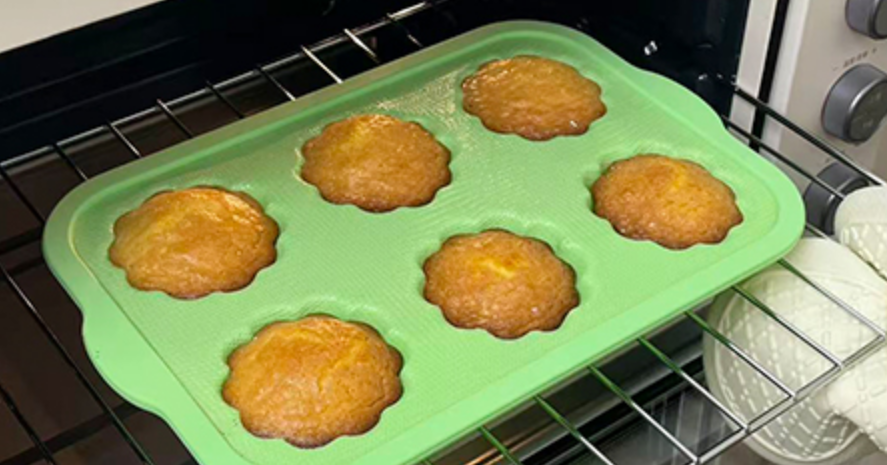
This is where fiberglass-reinforced baking trays come in.
By adding a fiberglass core inside the silicone structure:
- Shape is better maintained
- Bending is reduced
- Load-bearing ability improves
- Long-term performance becomes more stable
Silicone still provides the surface benefits.
Fiberglass simply adds internal strength.
9. Choosing the Right Product for the Right User
Not every customer needs a reinforced baking tray.
Pure silicone trays are still suitable for:
- Occasional home baking
- Light recipes
- Entry-level product lines
Fiberglass-reinforced trays are more suitable for:
- Frequent bakers
- Mid-to-high market positioning
- Users who value consistency and stability
Understanding this difference helps buyers and sellers avoid mismatched expectations.
10. Final Thought
Silicone baking trays became popular because they solved many problems of traditional baking tools.
But as baking habits evolve, new expectations appear.
Deformation is not a failure of silicone — it is a signal that usage patterns have changed.
In the next article, we will explain in detail:
What fiberglass actually does inside a baking tray — and why it changes performance so significantly.
Because in baking tools, performance is not only about surface features.
It starts from the structure inside.