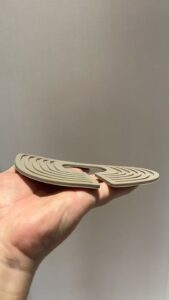
Fiberglass baking trays are often described with simple phrases like “more stable” or “reinforced.”
But many buyers still ask a very practical question:
What does fiberglass actually do inside a baking tray?
To answer this, we need to look beyond surface features and focus on structure. Because in baking tools, structure determines long-term performance.
- Fiberglass Is Not There to Replace Silicone
First, it is important to clarify a common misunderstanding.
Fiberglass does not replace silicone in baking trays.
It does not touch food, and it does not change the non-stick surface.
Silicone is still responsible for:
Non-stick performance
Easy cleaning
Food contact safety
Heat resistance
Fiberglass has a different role entirely:
it provides internal support.
Think of silicone as the skin of the product, and fiberglass as the skeleton inside.
- Why Silicone Alone Needs Support
As discussed in the previous article, silicone is flexible by nature.
This flexibility is useful, but under frequent baking conditions, it also creates challenges:
Softening at high temperatures
Bending under weight
Gradual loss of shape
When a baking tray relies only on silicone, all structural responsibility rests on a soft material. Over time, this leads to instability.
Fiberglass is introduced not to change silicone’s properties, but to balance them.
- What Fiberglass Adds: Structural Stability
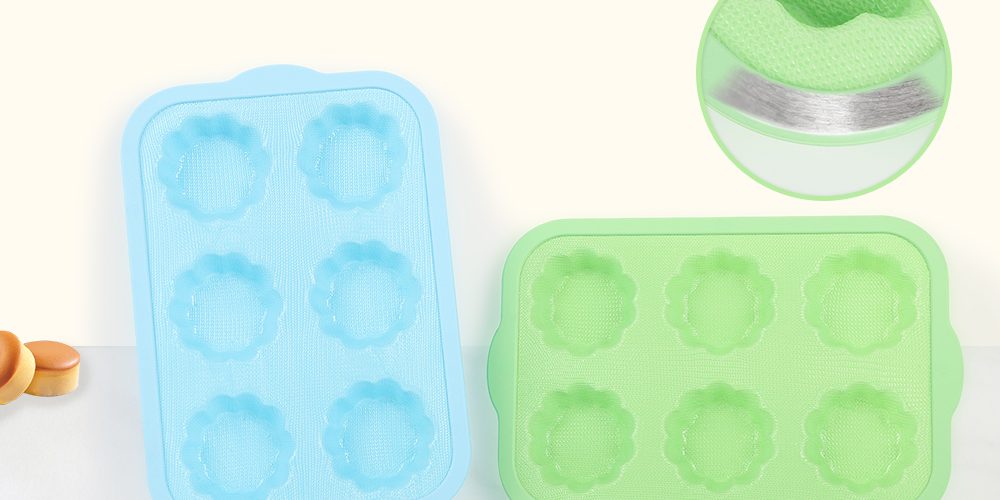
Inside a baking tray, fiberglass usually appears as a woven mesh or fabric layer, embedded within the silicone body.
This fiberglass layer helps to:
Hold the tray flat during baking
Reduce bending and warping
Distribute weight more evenly
Maintain consistent shape after repeated use
In simple terms, fiberglass limits how much the silicone can move under stress.
This is especially important when:
Baking large cakes
Using heavy batter
Baking at high temperatures
Placing trays on wire racks
- How Fiberglass Improves Heat Performance
Fiberglass does not directly improve heat resistance — silicone already handles that well.
However, fiberglass improves heat performance indirectly.
By stabilizing the structure:
The tray stays flat
Heat distribution becomes more consistent
Baking results are more predictable
A tray that bends or sags can create uneven thickness in batter, which affects baking time and texture. Structural stability helps reduce this risk.
- Why Thickness Alone Is Not Enough
Some people assume thicker silicone can replace fiberglass.
In practice, thickness helps only to a point.
Thicker silicone:
Still softens at high temperatures
Still lacks internal reinforcement
Increases material cost and weight
Fiberglass works differently. It adds strength without relying on mass.
This allows trays to stay relatively thin while still maintaining shape.
From a design perspective, this is a more efficient solution.
- Fiberglass and Long-Term Durability
One of the biggest benefits of fiberglass is durability over time.
With repeated baking:
Pure silicone trays slowly fatigue
Shape recovery becomes weaker
Deformation becomes more noticeable
Fiberglass slows this process by absorbing part of the stress during each heat cycle.
As a result:
The tray keeps its original form longer
Performance remains consistent
The product feels more “solid” after months of use
This is why frequent bakers often notice a clear difference.
- What Fiberglass Does Not Do
To avoid unrealistic expectations, it is important to say what fiberglass does not do:
It does not make a tray indestructible
It does not eliminate flexibility completely
It does not turn a baking tray into a metal pan
Fiberglass baking trays are still flexible, just controlled in their flexibility.
The goal is balance, not rigidity.
- Why Fiberglass Trays Feel More “Professional”
Many users describe fiberglass-reinforced trays as feeling more “professional.”
This feeling comes from:
Better handling stability
Less shaking when carried
More confidence when placing trays in and out of ovens
These are small details, but together they shape user perception.
In product positioning, this matters a lot.
Professional feel supports higher price points and stronger brand trust.
- Design and Manufacturing Considerations
From a factory perspective, fiberglass baking trays are more complex to produce.
They require:
Precise layer placement
Accurate mold design
Controlled bonding between silicone and fiberglass
Stricter quality checks
Not all factories handle this equally well, which explains why fiberglass trays with similar appearances can perform very differently.
For buyers, understanding this helps explain price differences in the market.
- Who Fiberglass Baking Trays Are Really For
Fiberglass reinforcement makes sense for:
Frequent home bakers
Mid-to-high market product lines
Brands focusing on long-term user experience
Sellers aiming to reduce negative reviews related to deformation
They may be unnecessary for:
Occasional baking
Entry-level price competition
Single-use or low-frequency markets
Choosing fiberglass is not about “better” or “worse,” but about fit.
Final Thought
Fiberglass inside a baking tray does one essential thing:
it makes performance more predictable over time.
As home baking habits evolve, users expect tools that can keep up.
Fiberglass reinforcement is not a marketing concept — it is a structural response to real usage demands.
In the next article, we will explore:
Who should choose fiberglass baking trays — and who should not.
Because the best baking tool is not the most advanced one,
but the one designed for the right user.