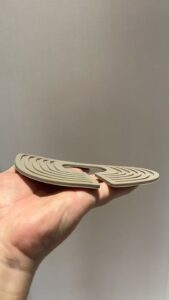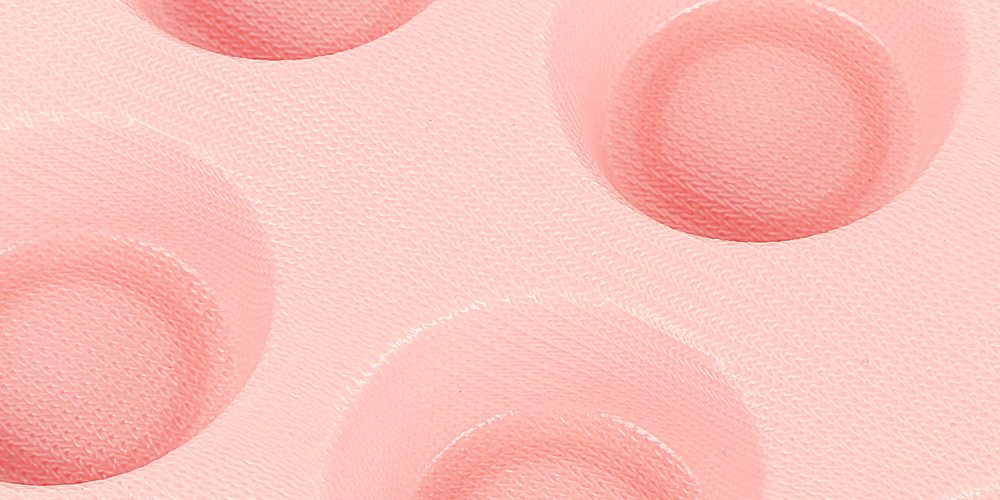
In recent years, fiberglass baking trays have become more visible in the bakeware market.
They are often described as “reinforced,” “more stable,” or “professional.”
This raises an important question for buyers and brands:
Are fiberglass baking trays just a short-term trend — or are they part of a long-term shift in premium bakeware?
To answer this, we need to look beyond the product itself and understand how the market is evolving.
1. Home Baking Is No Longer Occasional
One of the biggest changes in recent years is the growth of home baking.
Baking is no longer limited to:
- Special occasions
- Holiday seasons
- Occasional hobbies
For many consumers, it has become part of a regular routine.
People now:
- Bake weekly or even daily
- Try more complex recipes
- Care more about consistency and results
As usage frequency increases, expectations toward baking tools also change.
Tools are no longer judged only by convenience — but by long-term performance.
2. Market Upgrade: From Basic to Experience-Driven
In many product categories, we see a similar pattern:
- Entry-level products focus on price
- Mid-to-high products focus on experience
Bakeware is following the same path.
Consumers are starting to ask:
- Does the tray stay stable during baking?
- Will it deform over time?
- Does it feel reliable when handling heavy batter?
These questions go beyond basic functionality.
They reflect a broader market upgrade, where user experience becomes a key decision factor.
3. The Limits of Single-Material Solutions
For years, silicone baking trays dominated the market because they solved major problems:
- Non-stick performance
- Easy cleaning
- Flexibility
However, as baking becomes more frequent, the limitations of a single material become more visible:
- Loss of shape under repeated heat
- Reduced stability with heavy loads
- Less predictable long-term performance
This does not mean silicone is no longer useful.
It simply means that usage has evolved beyond what a single material can easily handle.
4. Structural Reinforcement as a Natural Step
When material limitations appear, the next step is often structural improvement.
In bakeware, this takes the form of fiberglass reinforcement.
Fiberglass does not replace silicone.
Instead, it adds internal support to improve:
- Shape stability
- Load-bearing performance
- Long-term durability
This shift from “material-only” to “structure-based design” is not unique to bakeware.
It can be seen across many product categories as they mature.
5. Premiumization: More Than Just Price
Fiberglass baking trays are often associated with higher prices.
But premiumization is not simply about cost — it is about value perception.
Premium bakeware typically offers:
- Better consistency in results
- Stronger product feel
- Longer usable life
- More confidence during use
Fiberglass reinforcement supports all of these aspects.
This is why it fits naturally into mid-to-high market positioning, especially for brands targeting serious home bakers.
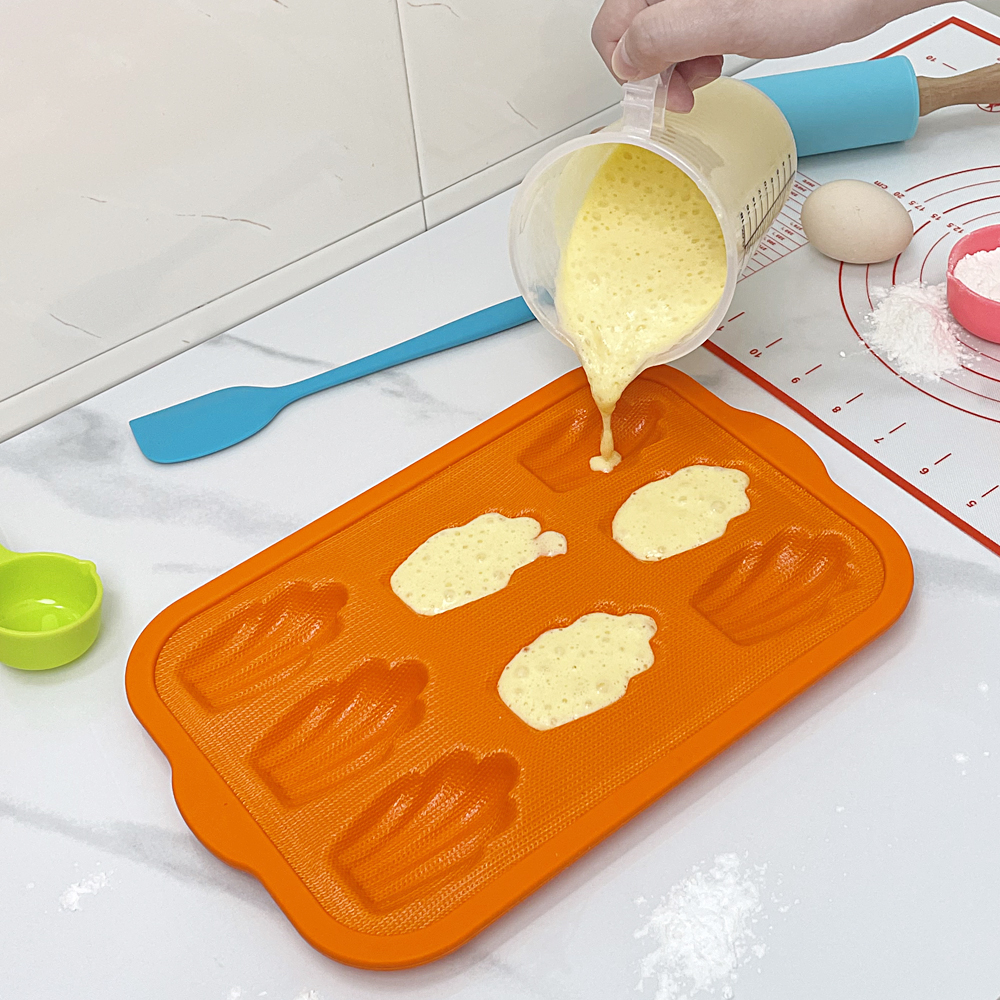
6. Will Fiberglass Become the Standard?
The key strategic question is whether fiberglass baking trays will become the new standard.
The answer is: not entirely — but partially, and selectively.
Fiberglass is likely to become standard in:
- Premium product lines
- High-frequency usage scenarios
- Performance-focused bakeware categories
However, pure silicone will remain relevant for:
- Entry-level markets
- Occasional users
- Price-sensitive segments
In other words, the market will not replace one material with another.
It will segment more clearly based on usage and expectations.
7. What This Means for Brands and Buyers
For brands, this shift means:
- Product lines may need clearer differentiation
- Material explanation becomes part of storytelling
- Structural design becomes a competitive factor
For buyers and importers:
- Product selection should match target customers
- Over-specifying can hurt competitiveness
- Under-specifying can lead to performance complaints
The opportunity is not in following trends, but in understanding where the market is heading.
Final Thought
Fiberglass baking trays are not just a trend — but they are not a universal future either.
They represent a broader shift in bakeware:
from basic functionality to performance-driven design.
As home baking continues to grow and consumers expect more from their tools, structural reinforcement will play a larger role — especially in premium segments.
In the end, the future of bakeware is not defined by a single material,
but by how well products are designed to match real usage.