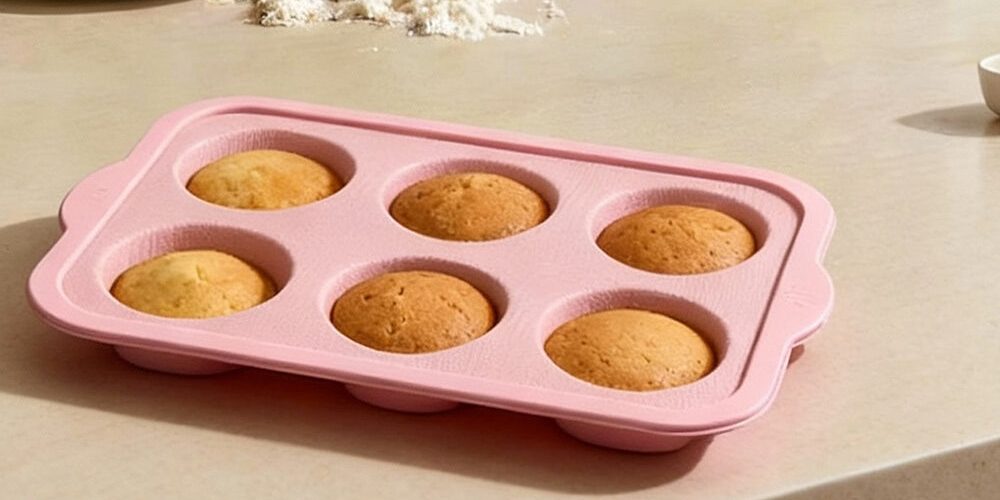
Fiberglass baking trays are designed to provide better structural stability than pure silicone trays. However, stability is not something that can be judged by appearance alone. A tray may look perfect when new but behave very differently after months of repeated baking.
For professional buyers, importers, and product developers, evaluating long-term stability requires more than a quick visual inspection. It requires testing methods that simulate real usage.
Below are several practical ways factories and buyers test fiberglass baking trays to understand how they perform over time.
1. Heat Cycle Testing
The most important stress factor for baking trays is repeated heating and cooling.
During baking, trays are exposed to high temperatures for extended periods, then quickly cooled once removed from the oven. Over time, this expansion and contraction can affect the bonding between silicone and fiberglass and may gradually alter the tray’s shape.
A typical heat cycle test works like this:
- Place the tray in an oven at a common baking temperature (for example 200–230°C / 392–446°F).
- Keep the tray inside for 20–30 minutes.
- Remove the tray and allow it to cool to room temperature.
- Repeat the cycle dozens or even hundreds of times.
After repeated cycles, inspectors check for:
- Permanent bending
- Loss of flatness
- Changes in flexibility
- Separation between silicone and fiberglass layers
This test simulates months of regular baking in a shorter time frame.
2. Load Testing
Another key factor in real baking is weight. Batters, doughs, and fillings can place significant pressure on a tray, especially when the tray is supported only by a wire rack.
Load testing evaluates how well the tray maintains its shape under stress.
A common method includes:
- Placing the tray on a standard oven rack
- Adding a fixed weight that represents heavy batter or dough
- Heating the tray at baking temperature for a defined period
During and after the test, inspectors observe:
- How much the tray bends under weight
- Whether the tray returns to its original shape after cooling
- Whether structural stability changes after repeated cycles
Fiberglass reinforcement should reduce excessive bending and improve shape recovery.
3. Deformation Observation
Even small changes in shape can affect baking results. Uneven surfaces may cause batter to spread irregularly or heat distribution to change.
For this reason, factories often perform flatness checks before and after testing.
Typical observations include:
- Measuring tray flatness on a reference surface
- Checking edge alignment
- Inspecting corners for early warping
- Comparing shape before and after multiple heat cycles
Some factories use measurement tools, while others rely on reference plates or calibrated surfaces to detect deformation.
Although the differences may appear small, they become more noticeable after long-term use.
4. Bonding Integrity Checks
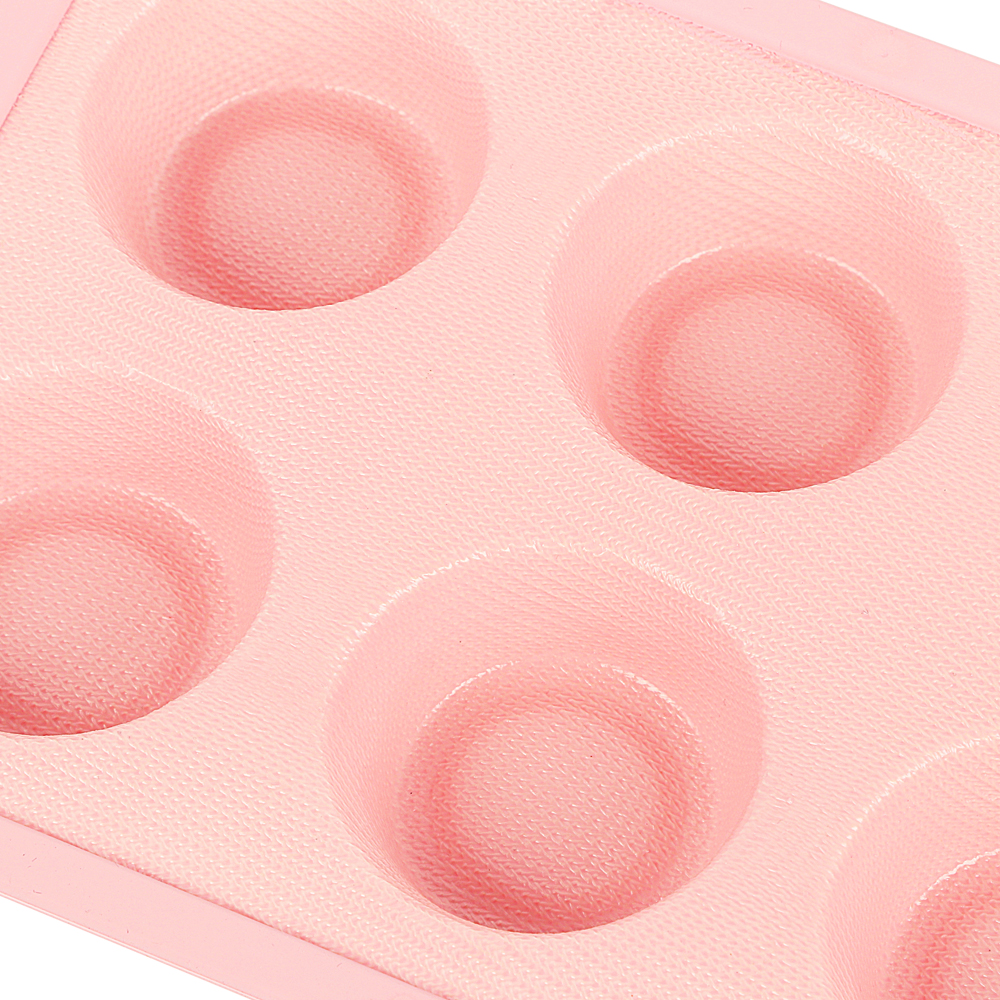
Because fiberglass reinforcement is embedded inside silicone, bonding quality is critical.
If bonding between the materials is weak, repeated heating and mechanical stress can eventually cause separation or internal movement of the fiberglass mesh.
Factories may inspect bonding through:
- Visual inspection after heat cycling
- Flex testing along different tray directions
- Edge inspection where layers are closest to the surface
A stable fiberglass tray should maintain consistent flexibility without showing signs of internal separation.
5. Internal Factory Testing Methods
Experienced factories often combine several testing approaches to simulate real usage conditions.
Typical internal testing programs may include:
- Repeated heat cycling combined with load testing
- Long-duration baking tests at maximum recommended temperatures
- Structural recovery checks after cooling
- Random sampling from production batches
These tests help manufacturers identify weaknesses in:
- mold design
- material thickness distribution
- fiberglass placement
- silicone bonding strength
Factories that invest in such testing usually achieve more consistent product performance in the market.
6. What Buyers Should Ask Suppliers
When evaluating fiberglass baking trays, buyers do not need to run all tests themselves. However, they should ask suppliers about their testing approach.
Useful questions include:
- Do you perform heat cycle testing?
- How many cycles are typically tested?
- Do you test trays under load?
- How do you check deformation after testing?
- What quality standards are applied during production?
Suppliers who can clearly explain their testing process usually have better control over product stability.
Final Thought
Fiberglass baking trays are designed to improve structural stability, but their long-term performance depends on more than just materials.
Heat cycles, mechanical load, bonding strength, and manufacturing precision all play important roles.
Testing methods such as heat cycle testing, load testing, deformation observation, and internal factory validation provide a clearer picture of how a tray will behave after months of real baking.
For professional buyers and importers, understanding these testing principles makes it easier to evaluate suppliers and select products that will perform reliably over time.