
Fiberglass baking trays are often positioned as a structural upgrade from pure silicone.
However, many sourcing decisions are still made using criteria designed for standard silicone products.
This mismatch leads to common — and costly — mistakes.
If you are evaluating fiberglass baking trays, here are the most frequent errors buyers make, and how to avoid them.
1. Treating Fiberglass as a Marketing Term
One of the most common mistakes is assuming that “fiberglass reinforced” automatically means better performance.
In reality, fiberglass only improves stability when:
- The mesh is correctly specified
- Placement is accurate
- Bonding with silicone is strong
- Thickness distribution is controlled
Simply adding fiberglass does not guarantee structural improvement.
Buyers should evaluate execution, not just labeling.
2. Comparing Only Unit Price
Fiberglass trays are more complex to produce than pure silicone trays.
When buyers compare them purely on price per piece, important factors are ignored:
- Production yield
- Long-term deformation resistance
- Return rate risk
- Brand positioning impact
Lower upfront cost may translate into higher after-sales risk.
Total cost of ownership is a more relevant metric than initial unit price.
3. Judging by New Samples Only
Many fiberglass trays perform well when brand new.
The real difference appears after:
- Repeated heat cycles
- Heavy batter loads
- Months of regular use
Evaluating only appearance and flexibility at room temperature is insufficient.
Buyers should request:
- Heat testing
- Load testing
- Shape recovery evaluation
Durability cannot be assessed through first impressions alone.
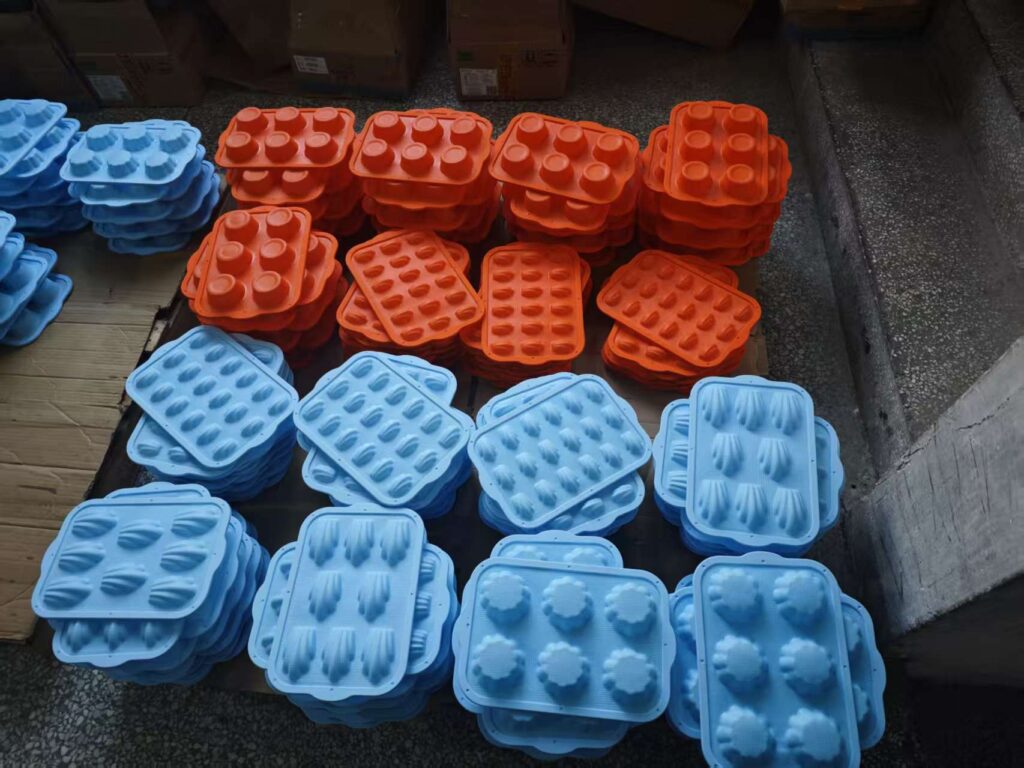
4. Ignoring Fiberglass Placement
Where fiberglass is positioned inside the tray matters significantly.
If mesh placement is inconsistent:
- One side may feel stiffer
- Corners may weaken faster
- Warping may occur unevenly
Without stable positioning during molding, structural reinforcement becomes unreliable.
Buyers should ask suppliers how they control mesh stability during production.
5. Over-Specifying for the Wrong Market
Not every market needs fiberglass reinforcement.
If the product is:
- Entry-level
- Price-driven
- Used occasionally
- Targeted at casual bakers
Fiberglass may not justify its cost.
Over-engineering can reduce competitiveness instead of improving it.
Smart sourcing means matching structure with real usage frequency.
6. Underestimating Mold Design
Fiberglass trays require more precise mold engineering than pure silicone trays.
Poor mold design can cause:
- Uneven thickness
- Weak corners
- Internal stress buildup
- Long-term deformation
Buyers often focus on materials but overlook tooling quality.
In many cases, mold design determines long-term performance more than the mesh itself.
7. Assuming All Factories Have Equal Experience
Fiberglass reinforcement is process-sensitive.
Factories without sufficient experience may struggle with:
- Bonding consistency
- Mesh alignment
- Curing control
- Structural balance
Two trays may look identical externally but behave differently over time.
Supplier experience is often a stronger predictor of performance than material claims.
8. Failing to Define the Real Objective
Before sourcing fiberglass trays, buyers should clarify:
- Are we solving deformation complaints?
- Are we upgrading product positioning?
- Are we reducing return rates?
- Are we targeting professional users?
Without a clear objective, material upgrades may not deliver measurable business value.
Final Thought
Fiberglass baking trays are not inherently better.
They are structurally different — and must be evaluated accordingly.
The biggest sourcing mistakes happen when buyers:
- Apply silicone evaluation standards
- Focus only on price
- Skip long-term testing
- Ignore structural execution
Successful sourcing requires shifting from surface comparison to structural understanding.
When buyers evaluate fiberglass trays with the right framework, the product becomes a strategic decision — not just a material upgrade.