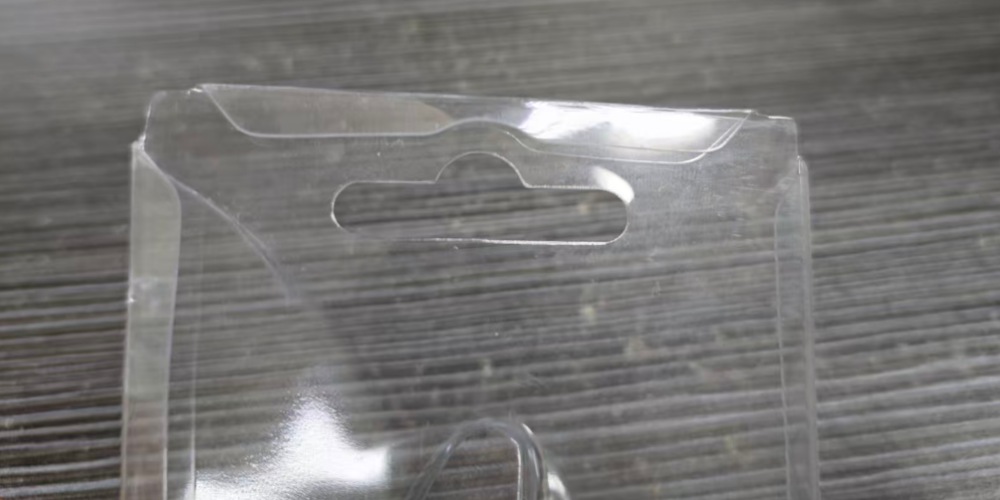
A Practical Guide to Packaging English for OEM & ODM Projects
If you work in international trade, you’ve probably experienced this situation: you know exactly what you want to say in Chinese—”收边做好一点” or “泡壳要平整”—but you’re not sure how to express it naturally in English.
Many packaging issues aren’t about product quality at all. They’re simply caused by unclear communication. Using the correct packaging terminology helps you avoid misunderstandings with customers, packaging suppliers, and designers, especially during OEM or private label projects.
Here are some of the most common packaging terms that every kitchenware exporter should know.
1. Edge Finishing (收边)
One of the most frequently discussed details in packaging is the edge finishing.
Instead of saying:
Please make the edge better.
A more professional expression would be:
Please improve the edge finishing to achieve a cleaner appearance.
If you’re referring specifically to blister packaging, you can also say:
- Blister edge finishing
- Heat-sealed edge
- Clean edge finish
- Seamless edge finish
These phrases describe the quality of the sealed edges and overall appearance.
Example:
We’d like the blister to have a clean edge finish without sharp or uneven edges.
2. Blister Packaging (泡壳包装)
Blister packaging is extremely common for kitchen utensils, silicone accessories, and small household products.
Common vocabulary includes:
- Blister packaging
- Clamshell packaging
- Blister card
- Backer card
- PET blister
- PVC blister
Example:
The silicone handle grip will be packed in a transparent PET blister with a printed backer card.
3. Hang Hole (挂孔)
Retail products often require a hole for display hooks.
Common expressions:
- Euro hole
- Hang hole
- Retail hanging hole
Example:
Please add a Euro hole for retail display.
4. Insert Card & Backer Card (彩卡)
Many suppliers confuse these two terms.
Insert Card
- Placed inside the package.
- Usually provides instructions or branding.
Backer Card
- The paper card sealed behind a blister package.
Example:
The artwork will be printed on a 350gsm backer card.
5. Matte or Gloss Finish (表面处理)
Surface finish greatly influences how premium a package looks.
Common terms:
- Matte finish
- Gloss finish
- Soft-touch finish
- UV coating
- Spot UV
- Lamination
- Matte lamination
- Gloss lamination
Example:
We’d like a matte laminated finish with spot UV on the logo.
6. Folding Edge & Wrapped Edge (折边)
When discussing paper boxes or folded paperboard:
- Folded edge
- Wrapped edge
Example:
The folded edges should be neat without visible wrinkles.
7. Die-cut (模切)
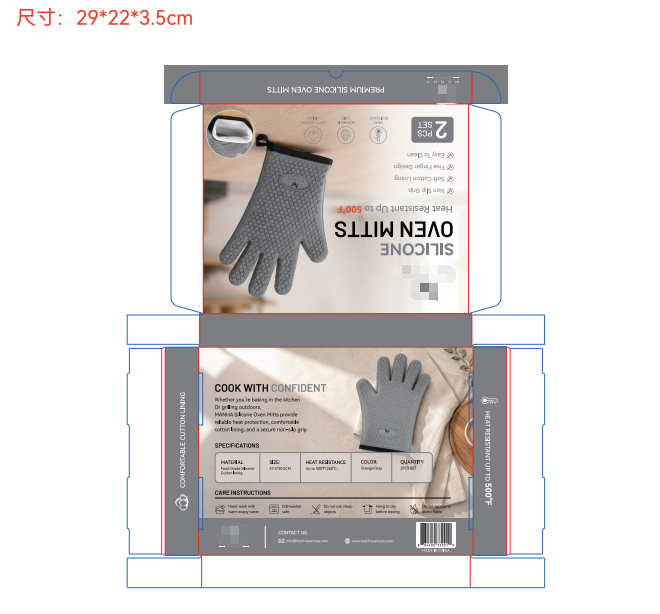
Almost every custom package involves die-cutting.
Useful expressions:
- Die-cut window
- Custom die-cut
- Die-cut shape
Example:
The front panel includes a die-cut window so customers can see the product.
8. Printing & Artwork Terms
Frequently used expressions include:
- Artwork
- Print-ready file
- CMYK printing
- Pantone color
- Bleed
- Crop marks
- Proof
- Mockup
Example:
Please send us the print-ready artwork in AI or PDF format.
9. Carton Terms
For export shipments, these terms appear almost every day.
- Inner box
- Master carton
- Carton dimensions
- Gross weight (GW)
- Net weight (NW)
- Carton marking
Example:
Please confirm the master carton dimensions before production.
10. Retail Packaging Descriptions
Customers often ask for packaging that feels more premium.
Useful adjectives include:
- Premium
- Minimalist
- Elegant
- Luxury
- Clean
- Modern
- Eco-friendly
- Retail-ready
Example:
We’d like a premium retail-ready package with a minimalist design.
Common Packaging Phrases You Can Use
Here are several practical sentences that can be used in daily communication:
- Please make the blister edge cleaner and more consistent.
- The heat-sealed edge should be smooth without burrs.
- The backer card should be perfectly aligned with the blister.
- Please use matte lamination for a premium appearance.
- We’d like to add a Euro hole for retail display.
- Please share a packaging mockup before mass production.
- The folded edges should be neat and wrinkle-free.
- Kindly confirm the carton markings before shipment.
Final Thoughts
Professional packaging is more than just an attractive design—it reflects product quality, brand image, and attention to detail. For exporters, learning the correct packaging terminology is one of the easiest ways to improve communication efficiency and reduce costly misunderstandings.
Whether you’re discussing blister packaging, edge finishing, lamination, or carton specifications, using industry-standard English helps your customers understand exactly what you mean and builds confidence in your professionalism.
The next time you review a packaging sample, try replacing simple phrases like “make it better” with precise terms such as edge finishing, backer card, matte lamination, or heat-sealed edge. Small improvements in language often lead to smoother projects, fewer revisions, and stronger long-term partnerships.