When we first started using Alibaba.com Logistics for our Trade Assurance orders, I thought the shipping process would be straightforward. Create the logistics order, fill in the information, choose the shipping service, and wait for the goods to arrive.
I was wrong.
Recently, I made a mistake that left me staring at my screen for half an hour, wondering what I had done.
Fortunately, I learned an important lesson, and I hope this article helps other suppliers avoid the same problem.
Everything Looked Perfect
The order was not large—only around USD 700.
The buyer was in the United States.
I selected Alibaba.com’s logistics service, filled in the shipping information, and when I reached the customs declaration section, I noticed two options:
- Formal Customs Declaration
- Informal Customs Declaration
Since the shipment value was relatively low, I thought:
“Informal declaration should be faster and simpler.”
Without thinking too much, I selected Informal Customs Declaration.
The shipment was picked up successfully.
Everything seemed fine.
Then Alibaba Asked for Something I Didn’t Have
A few days later, I returned to the order page.
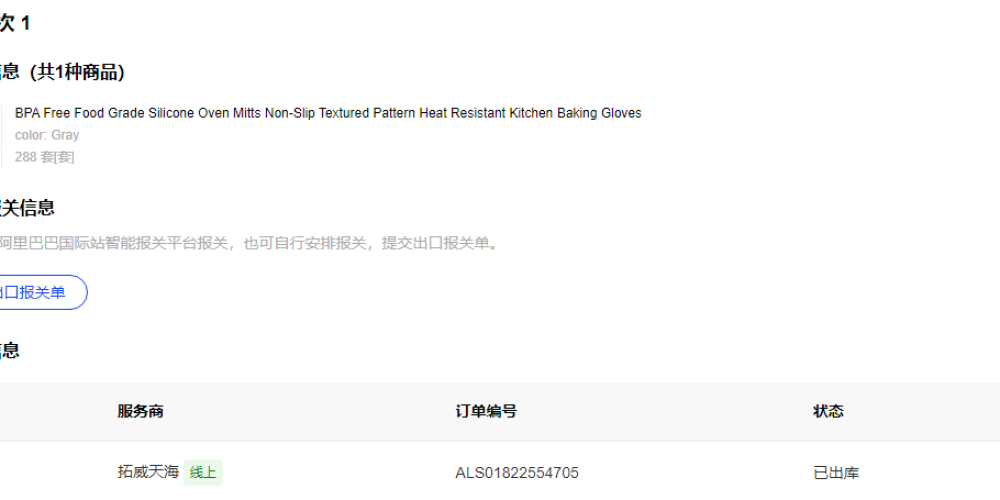
There was a large blue button waiting for me:
“Submit Export Customs Declaration.”
No problem, I thought.
Until I clicked it.
The system required me to upload:
- Export Declaration Number
- Official Export Customs Declaration Document
That’s when I realized…
Informal customs declarations don’t generate an official export declaration form.
In other words, Alibaba was asking me to upload a document that simply didn’t exist.
The Real Problem
At first, I thought I had forgotten to download the document.
Then I contacted the logistics provider.
Only after discussing it with experienced people did I understand the issue.
The problem wasn’t that I couldn’t find the declaration.
The problem was that I had selected the wrong customs declaration method from the beginning.
For Trade Assurance orders using Self-export, Alibaba may require official export declaration information for order verification.
However, informal customs declaration is designed for simplified clearance and usually does not provide the official export declaration document required by the platform.
One small click created a workflow conflict.
What I Learned
This experience taught me that logistics is not just about booking transportation.
Every option affects the documents you receive later.
As salespeople, we often focus on quotations, samples, and negotiations.
But international trade also requires understanding export procedures.
Sometimes the biggest problem isn’t with the customer.
It’s with one option we selected ourselves.
My Advice to Other Alibaba Suppliers
If you’re shipping through Alibaba Logistics, especially for the first few times, don’t rush through the logistics page.

Before confirming your shipment, ask yourself these questions:
- Is this a Trade Assurance order?
- Is the export method set as Self-export?
- Will Alibaba require an official export declaration later?
- Does my company need the export declaration for tax refund or compliance?
- Have I confirmed with the logistics provider which declaration type should be selected?
If you’re not 100% sure, spend two minutes asking your logistics provider before submitting the order.
It could save you hours—or even days—later.
Mistakes Are Expensive, But Lessons Are Valuable
Looking back, I was frustrated when I discovered my mistake.
But after understanding the process, I realized this wasn’t a failure.
It was simply part of learning international trade.
Every experienced exporter has stories like this.
The difference is that they learned from them.
Now I know that one small button on a logistics page can determine whether the entire export process goes smoothly.
I hope my experience helps another supplier avoid making the same mistake.
If this article saves even one person from repeating my error, then the lesson was well worth it.