Many buyers are surprised when they receive a quotation for a custom sample.
A common question is:
“If the product only costs USD 5 each, why does one sample cost USD 50?”
At first glance, it may seem unreasonable. However, the sample price and the bulk price are calculated in completely different ways. Understanding this difference can help buyers make better purchasing decisions.
Bulk Price Is Based on Mass Production
When you receive a unit price of USD 5, that price is usually based on a production quantity, such as 2,000 sets or more.
During mass production, many costs are shared across the entire order, including:
- Raw materials
- Machine setup
- Labor
- Quality inspection
- Factory management
- Packaging
Because these costs are divided among thousands of pieces, the cost of each individual product becomes much lower.
This is why bulk production always offers the most competitive pricing.
Why Is a Sample More Expensive?
A custom sample follows almost the same production process as a bulk order.
Even if only one piece is produced, the factory still needs to:
- Prepare the material
- Set up the machines
- Arrange production
- Polish and inspect the product
- Pack the sample carefully
The difference is that all these production costs are shared by only one sample instead of thousands of products.
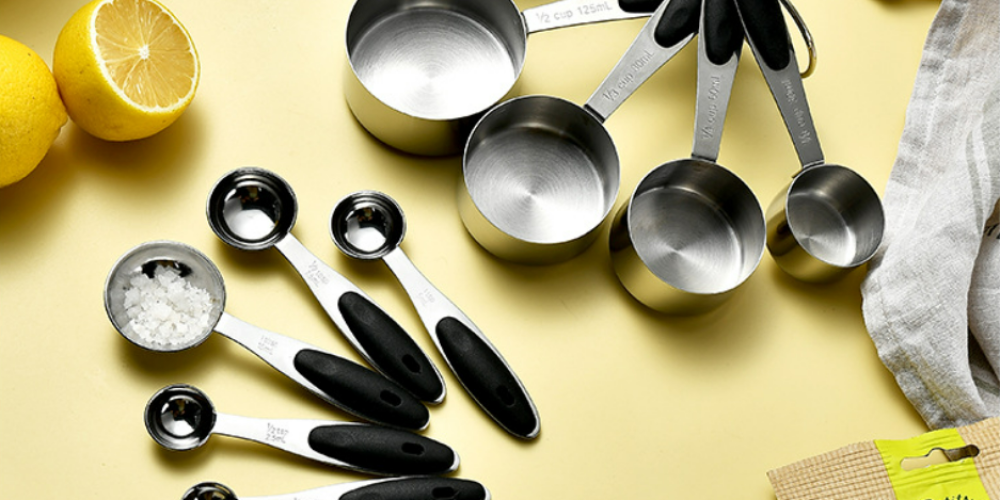
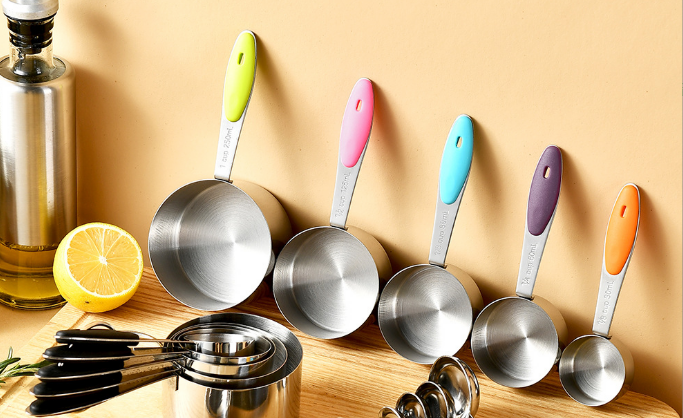
For example, if a customer requests a 304 stainless steel measuring cup but the factory only has a 430 stainless steel version in stock, the factory needs to arrange a separate production just for that one sample.
This is why a custom sample naturally costs much more than the bulk unit price.
Sample Fees Are an Investment
Many factories, including ours, refund the sample fee once the bulk order is confirmed.
In other words, the sample fee is not intended to create extra profit. It mainly covers the actual production cost of making a custom sample.
Once the project moves forward, the sample cost is returned to the customer.
This approach allows both the buyer and the factory to reduce unnecessary risks.
How MOQ Affects Pricing
Another common question is about Minimum Order Quantity (MOQ).
Sometimes buyers only need 1,000 sets, while the factory’s standard MOQ may be 2,000 sets.
Why?
The answer is similar to sample production.
Factories purchase raw materials, schedule workers, and arrange production lines based on efficient production volumes. Smaller quantities mean that the same setup costs are spread over fewer products, resulting in a higher production cost per unit.
In many cases, factories are still willing to support trial orders if possible, although the unit price may be slightly higher than the standard MOQ price.
This allows new customers to test the market while giving the factory a reasonable production plan.
Good Communication Creates Better Solutions
Every project is different.
Sometimes buyers are testing a new market. Sometimes they only need a small trial order before placing larger repeat orders.
The best solution is always open communication.
By sharing your expected order quantity, target market, and future purchasing plans, your supplier can often recommend the most suitable production solution instead of simply offering standard pricing.
Our Experience
As a manufacturer with years of experience in custom silicone and kitchenware products, we understand that every new project starts with questions.
Whether you need advice on material selection, sample development, MOQ, or packaging, our team is always happy to explain the production process clearly and help you find the most cost-effective solution.
Our goal is not only to manufacture products, but also to become a reliable long-term manufacturing partner for your business.